Maria Grazia Chiuri has consistently approached fashion as a way to explore femininity, identity and the relationship between women and their bodies. Since taking the creative helm at Fendi, the Italian designer has continued to examine those themes through clothing that balances strength, sensuality and self-expression. For Spring/Summer 2027, she turns toward the body with a collection filled with lingerie-inspired looks, sheer fabrics, revealing cuts and silhouettes designed to move.
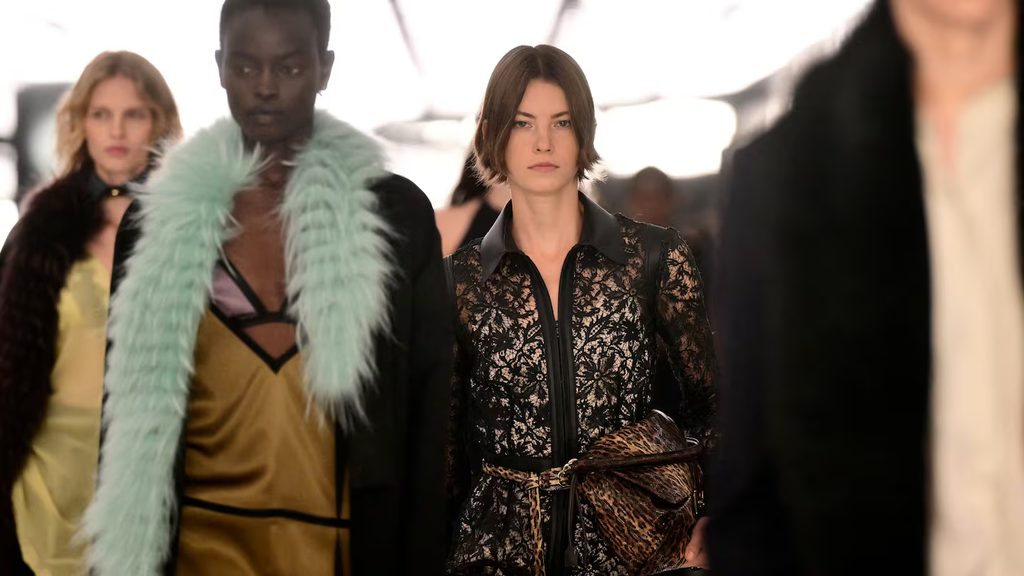
The collection’s central inspiration is one of Italy’s most iconic entertainers: Raffaella Carrà.
Known for her career as a singer, dancer and television personality, Carrà represented a particular kind of Italian glamour—energetic, confident and impossible to ignore. Her influence provides Chiuri with a rich cultural reference while connecting the collection to an era in which music, television, performance and fashion were closely intertwined.
Chiuri specifically looked to Carrà’s television appearances, including her memorable performances with Adriano Celentano on Milleluci. Their energetic choreography emphasized physical interaction and movement, offering a compelling reference for a collection in which the body is constantly in motion.
That influence can be seen throughout the runway.
Carrà frequently embraced figure-hugging clothing, from sleek catsuits and mesh tops to flared trousers and glittering bralettes. Chiuri revisits these recognizable elements but avoids turning the collection into a literal recreation of the past.
Instead, the designer extracts the attitude behind Carrà’s style and gives it a modern Fendi interpretation.
One of the clearest examples is a streamlined black jersey catsuit. The silhouette follows the body closely, while long sleeves, exposed shoulders and silver grommet details give it a contemporary edge. It recalls the confidence of Carrà’s wardrobe without attempting to reproduce one of her famous costumes.
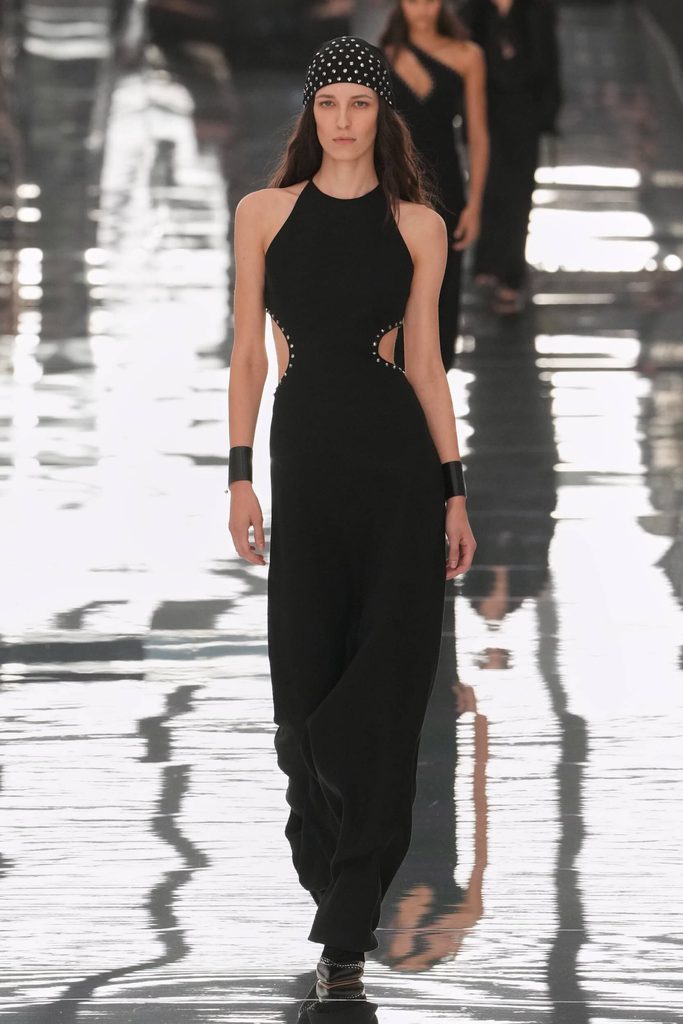
The influence of the disco era is equally visible in the collection’s eveningwear.
Maxi dresses covered in shimmering embellishments capture the excitement of 1970s nightlife. Designed to catch the light with every movement, they evoke the glamorous atmosphere of Studio 54 and the theatricality of disco dressing.
But Chiuri’s interest in the 1970s goes beyond nostalgia.
The decade provides a visual vocabulary for a deeper exploration of the body.
Lingerie becomes one of the collection’s most prominent elements. Garments traditionally worn underneath clothing are deliberately brought into the open, turning underwear into part of the visible fashion statement.
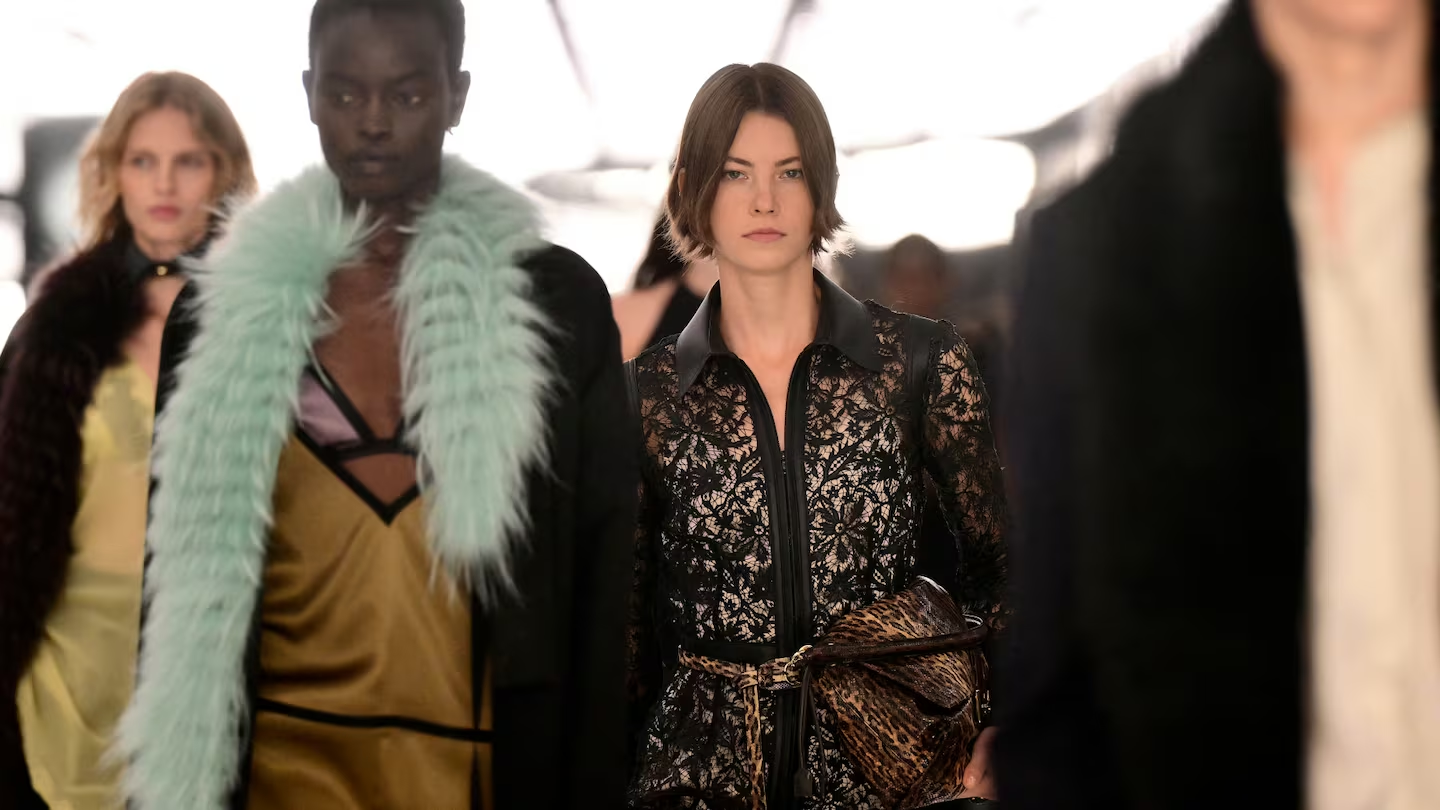
Satin shorts finished with lace are styled with coordinating triangle bras in teal, peach and black. Rather than looking like accidental flashes of underwear, the pieces are carefully integrated into the overall silhouette.
This approach gives familiar intimate garments a completely different role.
Lace becomes a key decorative feature. Satin introduces a combination of softness and shine. Bras help construct the shape of the outfit instead of remaining hidden beneath it. Chiuri effectively removes the boundary between lingerie and outerwear.
Sheer fabrics take that idea further.
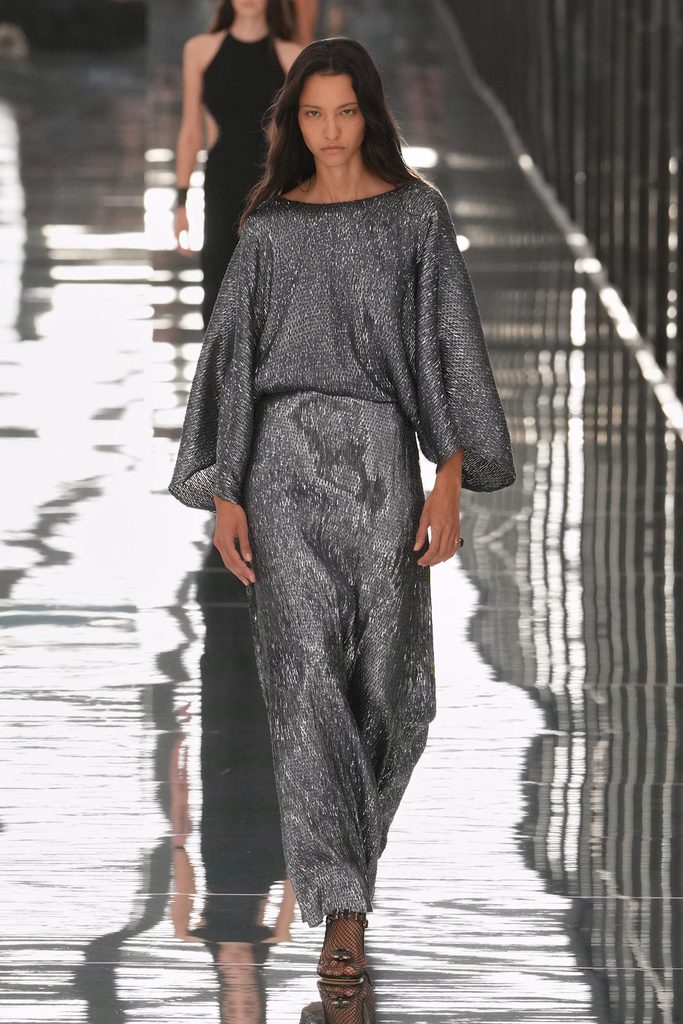
Transparent chiffon dresses allow the body and the layers underneath to remain visible, creating a constant tension between what is revealed and what remains concealed. Plunging necklines expose glimpses of skin and lingerie, while fringed tunics shift around the body with every step.
The collection also includes thigh-high playsuits with carefully placed cutouts, emphasizing the waist and legs while maintaining a sense of movement.
The result is sensual, but Chiuri’s intentions extend beyond visual seduction.
Her exploration of underwear becomes part of a larger conversation about intimacy and the experience of inhabiting one’s own body. Fashion becomes a tool for considering how clothing can influence confidence, physical awareness and personal expression.
That idea is reinforced by a literary reference.
E. E. Cummings’ poem I Like My Body When It Is With Your contributed to the conceptual foundation of the collection. Its focus on physical closeness and emotional connection complements Chiuri’s interest in the body as something connected to intimacy rather than simply appearance.
This is why the collection repeatedly moves between exposure and concealment.
A sheer dress can reveal the shape beneath it while still creating a visual barrier. A plunging neckline can be provocative while remaining carefully structured. Lingerie can be displayed publicly while retaining the intimate associations traditionally attached to it.
Chiuri does not try to resolve these contradictions.
Instead, she makes them part of the collection’s identity.
Strength and fragility coexist. Soft fabrics appear alongside structured silhouettes. Revealing garments are balanced by layers of transparent material. Some looks emphasize the figure, while others allow the body to disappear beneath flowing fabrics.
The materials play an important role in creating those contrasts.
Stretch jersey follows the body and emphasizes movement. Lace adds delicacy and texture. Chiffon creates transparency and fluidity, while embellishment introduces a more dramatic, glamorous quality. Fringe adds another element of motion, making the garments come alive as the models walk.
Despite the collection’s sensual direction, Fendi’s luxury heritage remains unmistakable.
The clothes are defined by careful construction, sophisticated materials and detailed craftsmanship. Lingerie-inspired pieces are elevated through precision and styling, giving them the status of luxury fashion rather than simply exposed underwear.
Carrà’s presence also provides a strong cultural foundation.
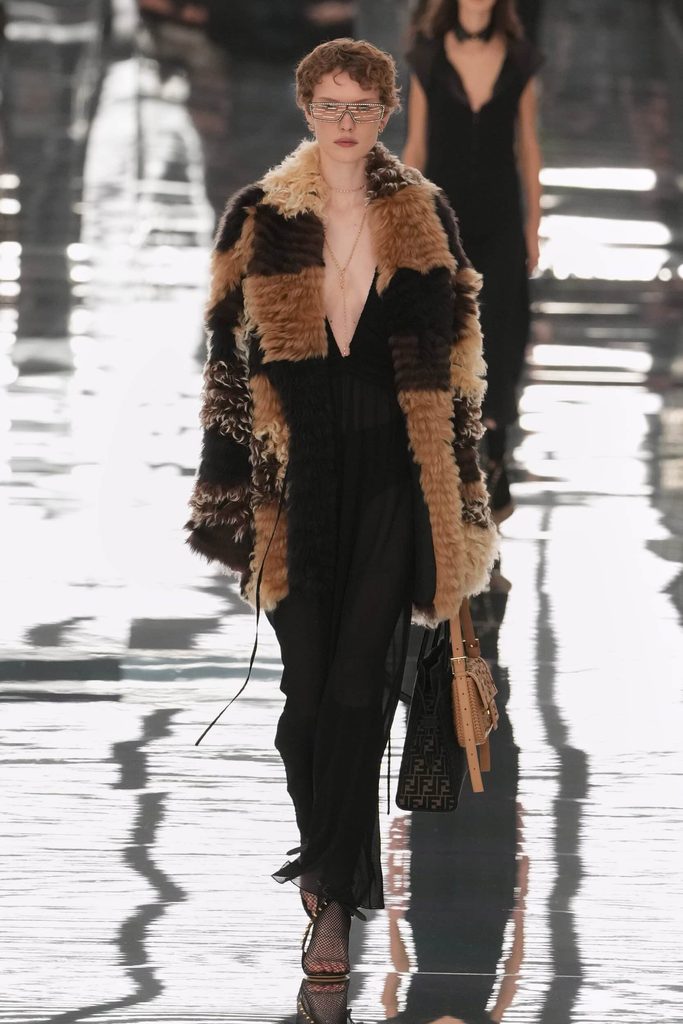
Her career reflected a particularly vibrant period in Italian popular culture, when television, music and fashion were often part of the same spectacle. She understood how clothing could become an extension of performance, using it to amplify her movement and personality.
Chiuri translates that philosophy without directly copying Carrà.
Instead, she focuses on the characteristics that made the performer so distinctive: glamour, confidence, physicality, energy and freedom. Those qualities become the emotional foundation of the collection.
The result looks to the past while remaining firmly contemporary.
Disco-inspired gowns share space with lingerie-focused separates. Sleek black jersey contrasts with transparent chiffon. Lace and fringe soften more body-conscious silhouettes, while embellishment adds a sense of occasion and drama.
Movement ties these seemingly different elements together.
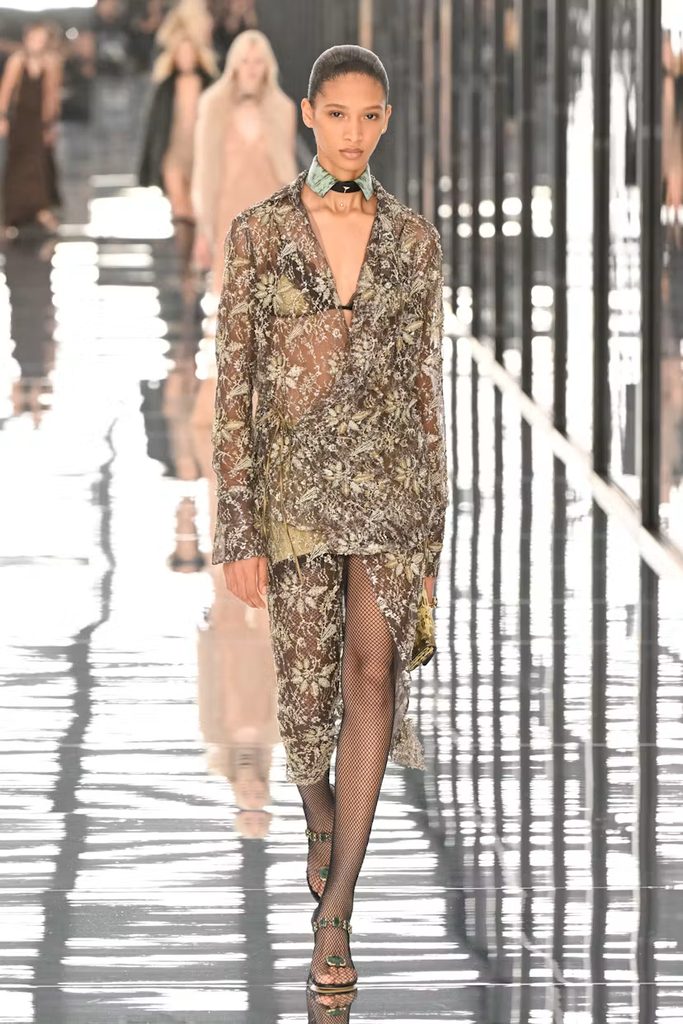
For Chiuri, clothing is not static. It interacts with the body, changing as the wearer walks, turns and moves. Garments reveal certain areas while concealing others, creating an ongoing dialogue between fabric, figure and movement.
That relationship becomes the central idea behind Fendi’s Spring/Summer 2027 collection.
Chiuri uses fashion to explore confidence, sensuality and individuality while drawing from a distinctly Italian cultural history. Raffaella Carrà provides the spark, but the resulting wardrobe belongs firmly to the present.
The collection combines 1970s glamour with contemporary craftsmanship, transforming lingerie, transparency and body-conscious dressing into sophisticated fashion statements.
For Spring 2027, Fendi celebrates the body not simply as something to be dressed, but as an essential part of how clothing moves, communicates and comes alive.