Demna challenges the traditions of bourgeois fashion, blending aristocratic elegance with provocative silhouettes and an unmistakably independent spirit.
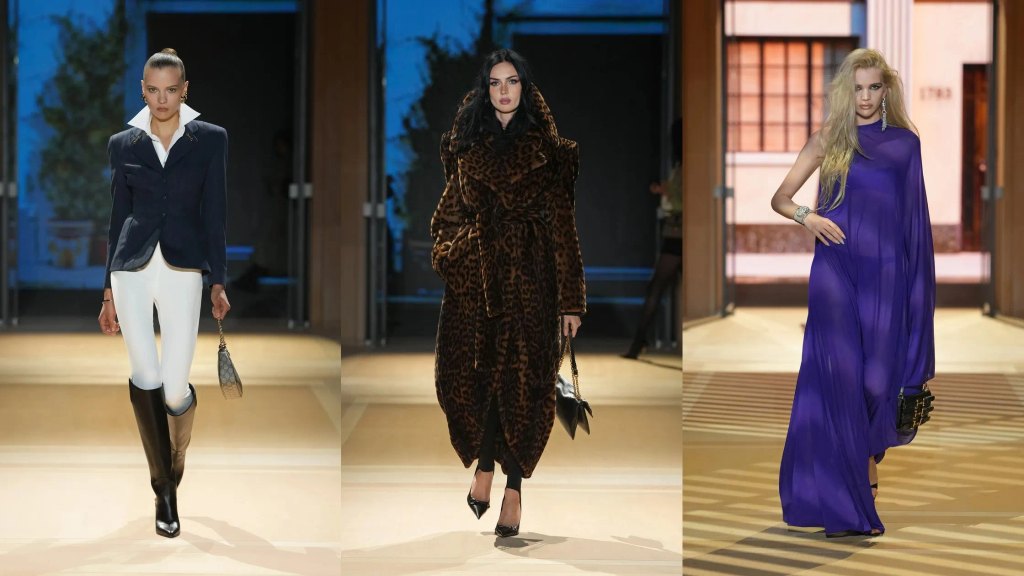
For Spring-Summer 2027, Demna offers a fresh perspective on Gucci, exploring the boundaries between inherited privilege and personal freedom. Unveiled in Milan on September 25, the collection brings together polished tailoring, equestrian-inspired looks, sensual eveningwear, and striking accessories. Drawing from the visual language of aristocratic dressing, the designer reworks familiar symbols of status into a wardrobe that challenges conventional ideas of refinement.
“Bourgeoisie is an attitude,” Demna remarked backstage, revealing the thinking behind the collection. His interpretation moves beyond luxury as a display of wealth, focusing instead on the complex relationship between identity and social belonging. At the heart of his vision is the rebellious aristocrat: someone raised within an exclusive world who nevertheless resists its expectations. This character embodies the tension between respecting tradition and refusing to be defined by it.
Throughout the show, Demna explores the conflicting impulses of aspiration and disillusionment. While outsiders may dream of entering privileged circles, those already inside them can feel constrained by their unwritten rules. By examining both positions, the designer transforms the familiar codes of elite culture into tools for individual expression. Gucci’s heritage remains visible, but its established meanings are deliberately unsettled.
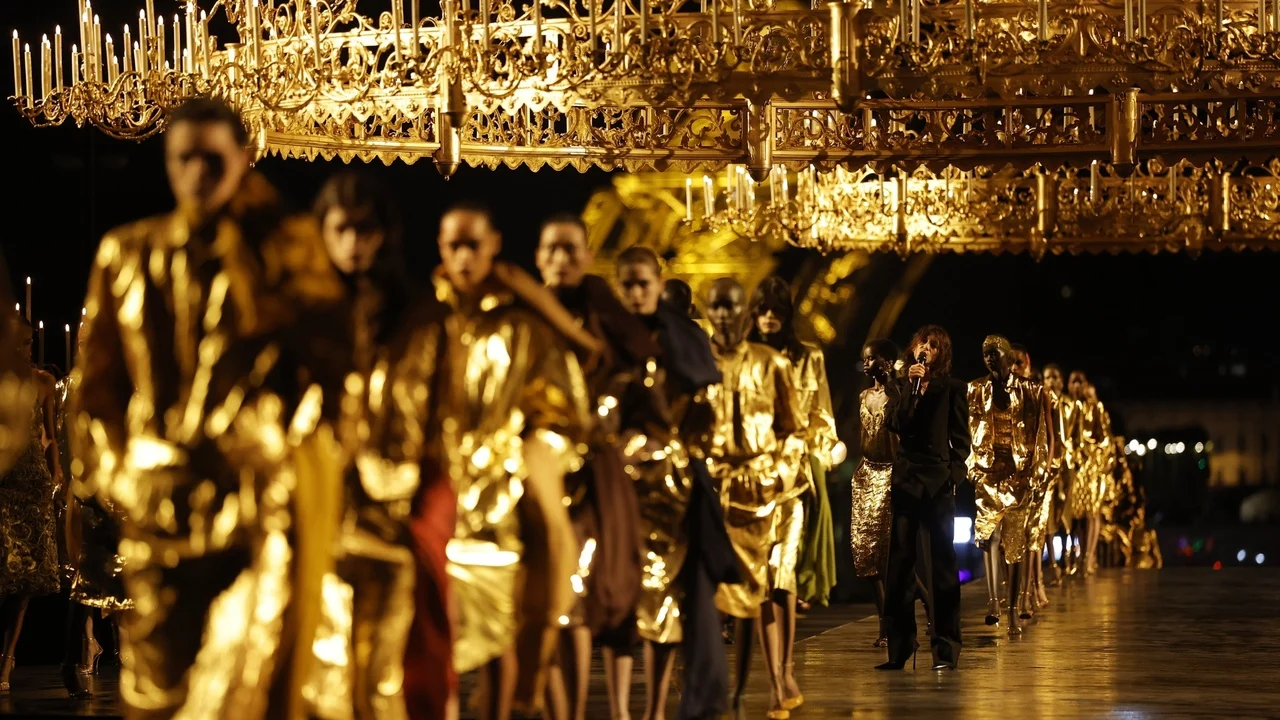
The presentation’s setting further developed this narrative. The venue was imagined as a future Gucci boutique, featuring lofty interiors and displays of ready-to-wear, handbags, footwear, and accessories. Beyond the glass doors, simulated rainfall created a cinematic contrast with the immaculate retail environment. The installation captured the allure of luxury shopping, where carefully curated objects become symbols of aspiration, exclusivity, and desire.
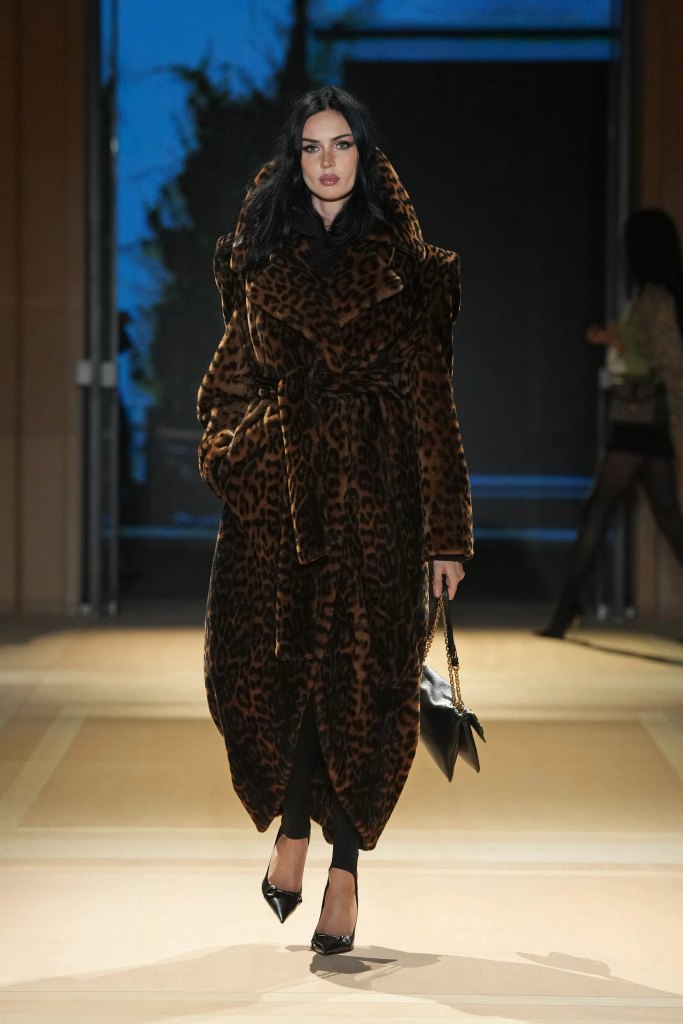
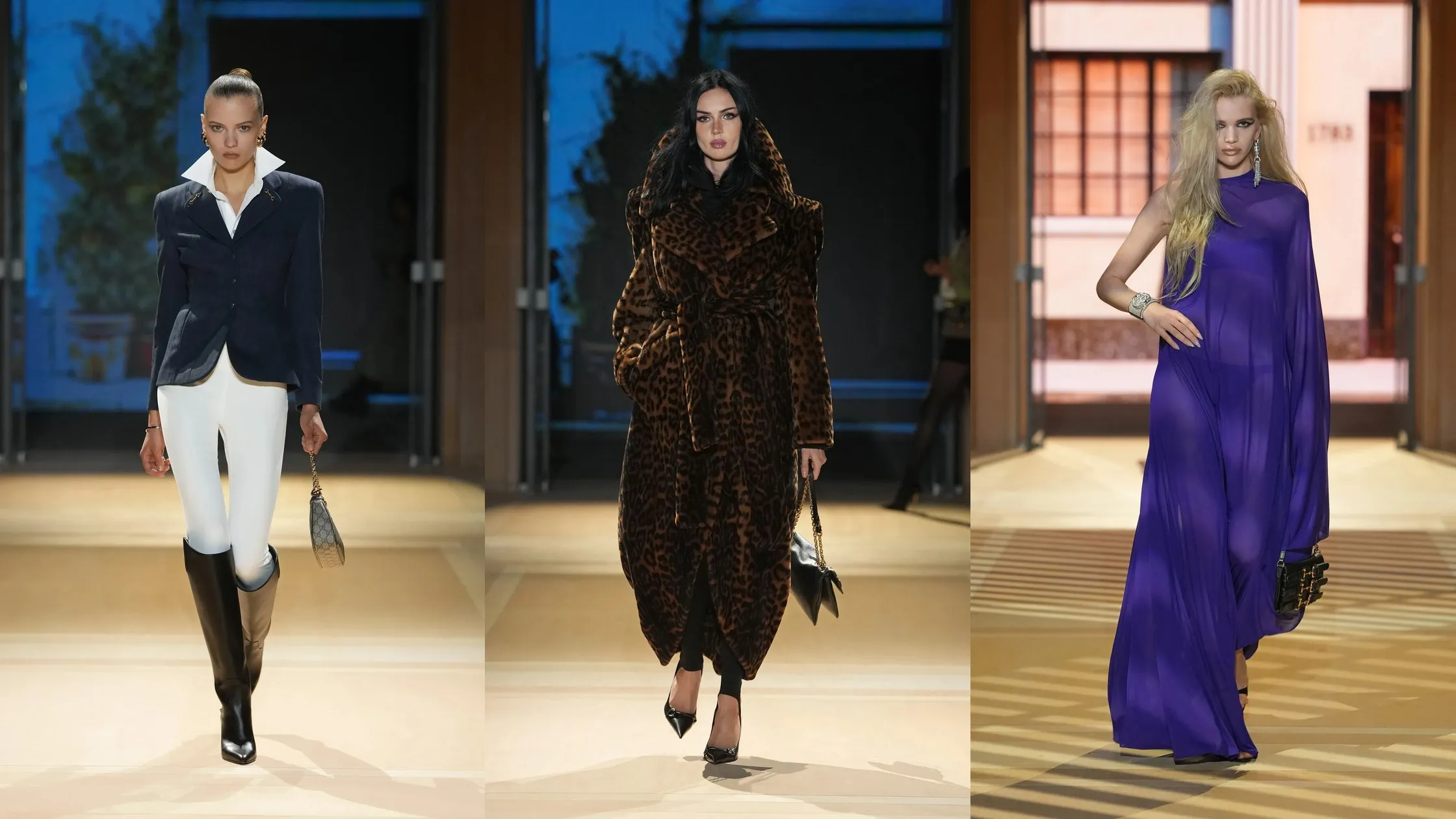
The womenswear collection opened with a series of looks inspired by equestrian traditions and the refined atmosphere of country estates. Close-fitting jodhpurs, crisp shirts with pronounced collars, and classic riding boots established a sophisticated foundation. Yet the introduction of delicate stilettos disrupted the practicality of traditional riding attire, adding an unexpected note of sensuality. Through these contrasts, Demna gave a familiar aristocratic uniform a more contemporary and provocative character.
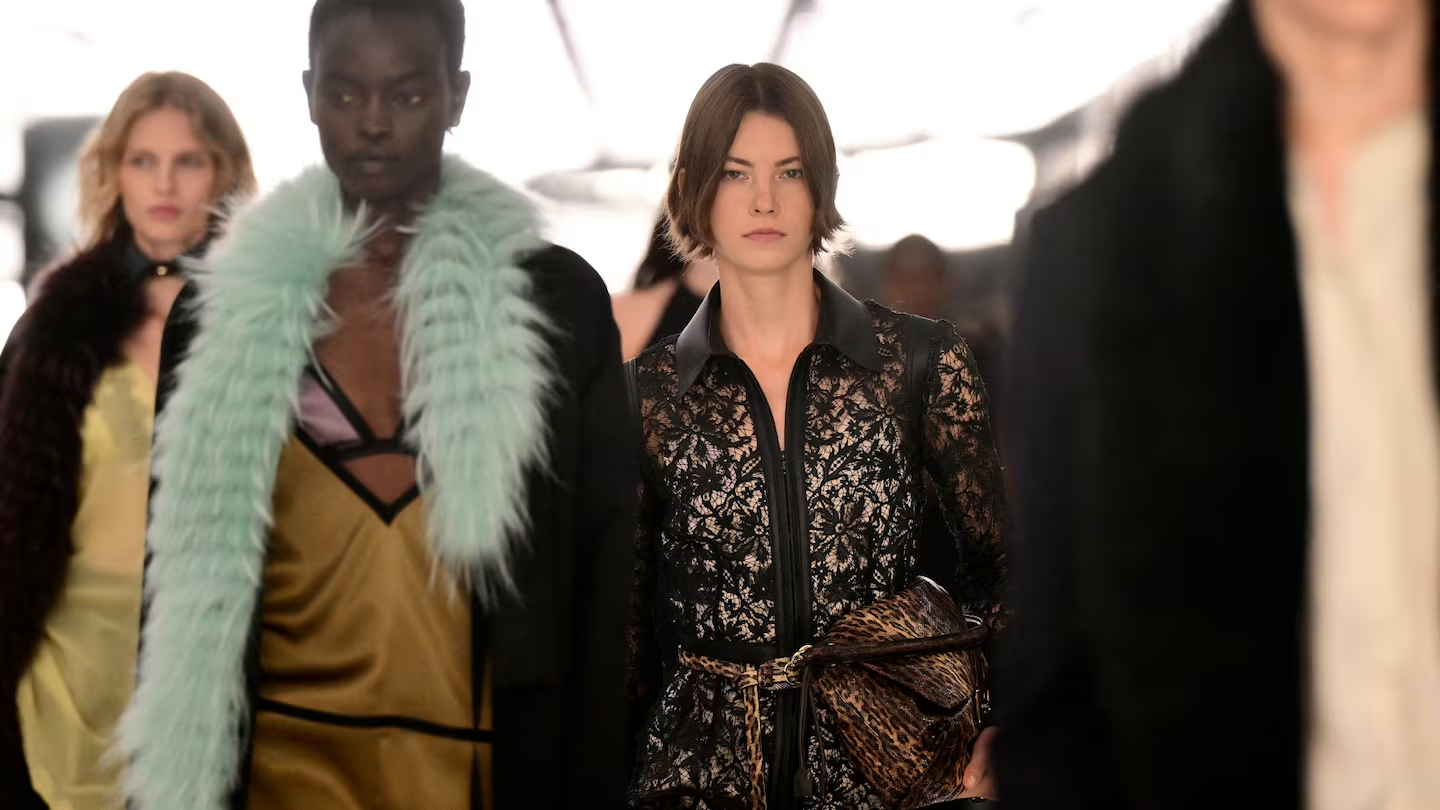
Country-club shirtdresses and trench coats continued the exploration of privileged dressing. Oversized sunglasses and substantial gold jewelry contributed to the looks’ confident extravagance. The presence of mature models also broadened the collection’s representation of femininity, emphasizing individuality, self-assurance, and character rather than conventional expectations of age. Their commanding runway appearances reinforced the idea that elegance is defined as much by attitude as by clothing.
Tailoring introduced a more sculptural dimension. Conventional suits were transformed through elongated proportions, dramatic collars, and architectural pagoda shoulders. Despite their pronounced shapes, the jackets remained relatively light in construction, with the absence of shoulder pads allowing their distinctive forms to appear less rigid. Narrow trousers, capri pants, and pencil skirts completed the silhouettes, offering a contemporary alternative to traditional office and power dressing.
The mood became more playful as Demna incorporated pieces associated with everyday and collegiate wardrobes. Rugby shirts were styled with pleated tartan skirts, while rounded bomber jackets introduced volume and visual contrast. Oversized belts featuring Gucci’s signature horsebit hardware stood out as defining accessories, accompanied by layers of jewelry. The combinations borrowed from preppy style without surrendering to its usual restraint, creating a wardrobe that felt deliberately unconventional.
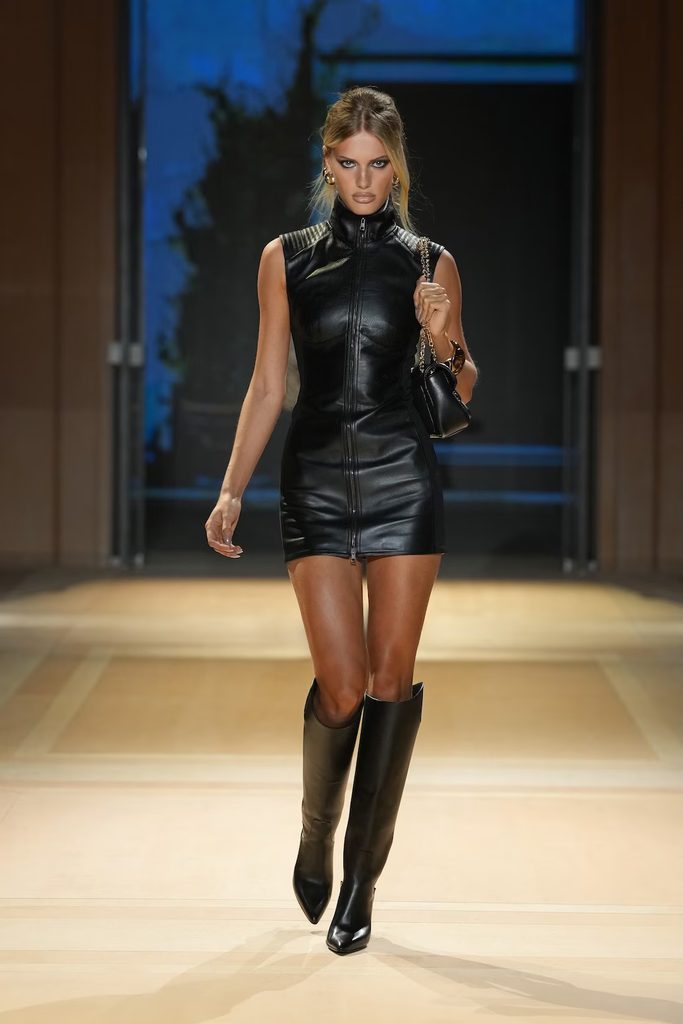
Another important reference was the image of a privileged schoolgirl who feels alienated from the prestigious institution she attends. Her clothes reflect her social environment, but her attitude challenges its expectations. This contradiction captures the collection’s rebellious core. Rather than abandoning the symbols of privilege, Demna repositions them, suggesting that familiar garments can become expressions of independence when worn on one’s own terms.
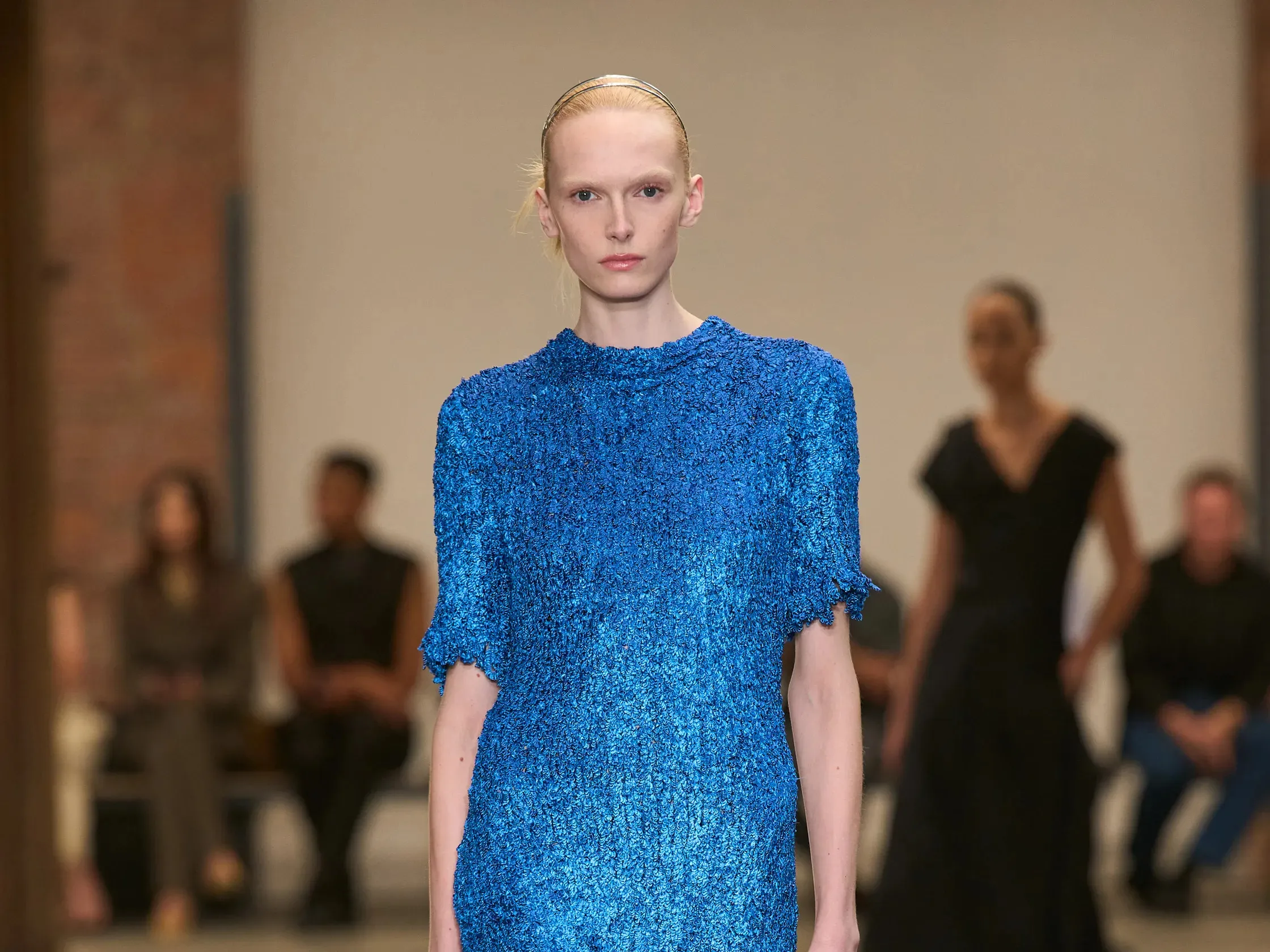
Eveningwear brought a more sensual form of glamour to the runway. Alex Consani, Anok Yai, Candice Swanepoel, and Rosie Huntington-Whiteley were among the models presenting designs that followed the body through fluid fabrics and carefully controlled draping. The apparent simplicity of the silhouettes concealed a sophisticated approach to construction, proportion, and finishing. The result combined seductive elegance with technical precision, maintaining Gucci’s affinity for dramatic femininity while introducing a more restrained sensibility.
The final look offered a particularly delicate expression of this philosophy. A pink-beige dress fell softly across the body, with fabric draped over one shoulder. At the back, a silver detail resembling a droplet secured the material and provided a discreet focal point. Instead of relying on elaborate decoration, the design demonstrated how precise craftsmanship and considered movement could produce a memorable effect.
The collection also builds on the different directions Demna has explored since beginning his work at Gucci. His earlier film, The Tiger, revisited the house’s flamboyant personalities and expressive history. The Fall 2026 collection emphasized sensual, body-conscious silhouettes, while the Resort 2027 presentation in New York examined the idea of a complete Gucci wardrobe, extending the brand’s codes into everyday dressing.
For Spring-Summer 2027, these strands come together in a vision that accommodates both refinement and eccentricity. Practical staples sit alongside dramatic details, and traditional elegance is continually interrupted by unexpected combinations.
Rather than erase Gucci’s established identity, Demna uses its history as a starting point for reinvention. His collection suggests that tradition can remain relevant precisely because it is open to reinterpretation.
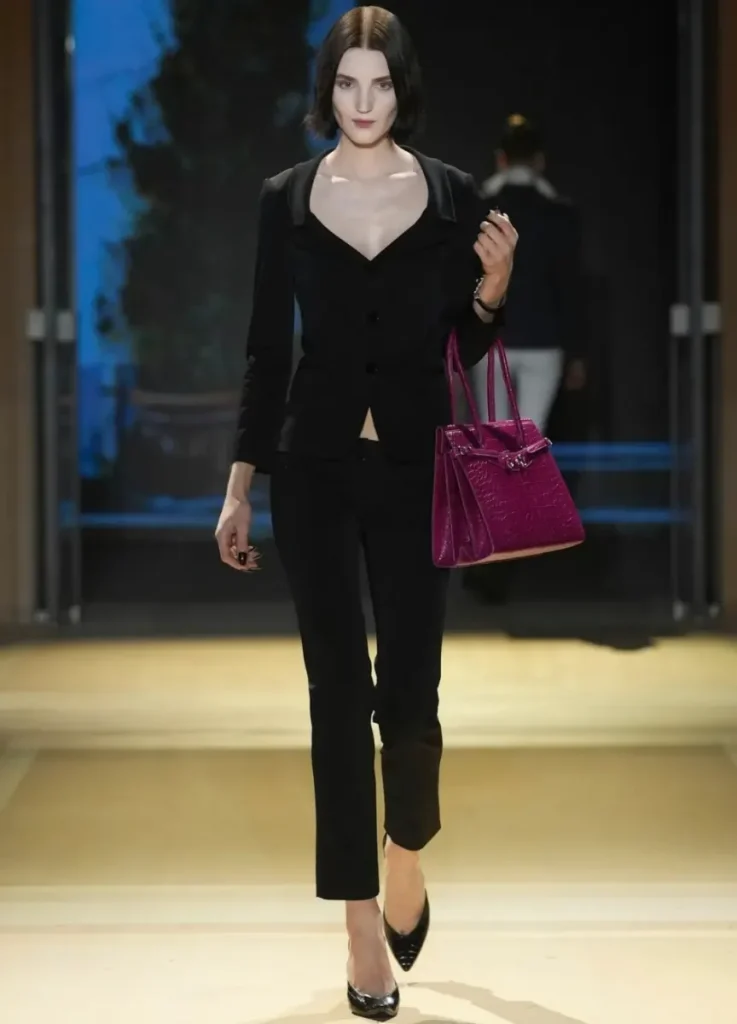
Ultimately, Gucci Spring-Summer 2027 presents luxury as something more personal than social standing or material wealth. Through sculptural tailoring, sensual design, and unconventional styling, Demna reimagines bourgeois fashion as a language of self-expression. His vision proposes that genuine distinction comes not from obeying every rule, but from understanding tradition well enough to challenge it with confidence.