A new creative era begins as Demna presents his first runway show for the historic Italian fashion house.

At this season’s Milan Fashion Week, one runway presentation drew exceptional attention from editors, buyers, and celebrities alike. Gucci introduced its Fall/Winter 2026/2027 collection in a show that marked the debut of its new creative director, Demna. The moment signaled the start of a new chapter for the iconic Italian fashion house.
For Gucci, the show carried particular significance. The brand, founded in Florence in 1921 by Guccio Gucci, has long been associated with Italian craftsmanship, bold design, and a distinctive sense of luxury that has influenced global fashion for decades. Despite its strong heritage, the company has recently faced a period of transition as shifts in consumer behavior and a slower luxury market affected performance.
In response, its parent company, Kering, has focused on reinvigorating the brand’s creative identity. The appointment of Demna last year was widely interpreted as a strategic move aimed at bringing fresh energy and relevance to the label.
The Georgian-born designer rose to international prominence during his time leading the creative direction at Balenciaga, where he became known for blending streetwear influences with luxury fashion. His designs often challenged conventional aesthetics, attracting younger audiences while redefining the relationship between high fashion and contemporary culture.

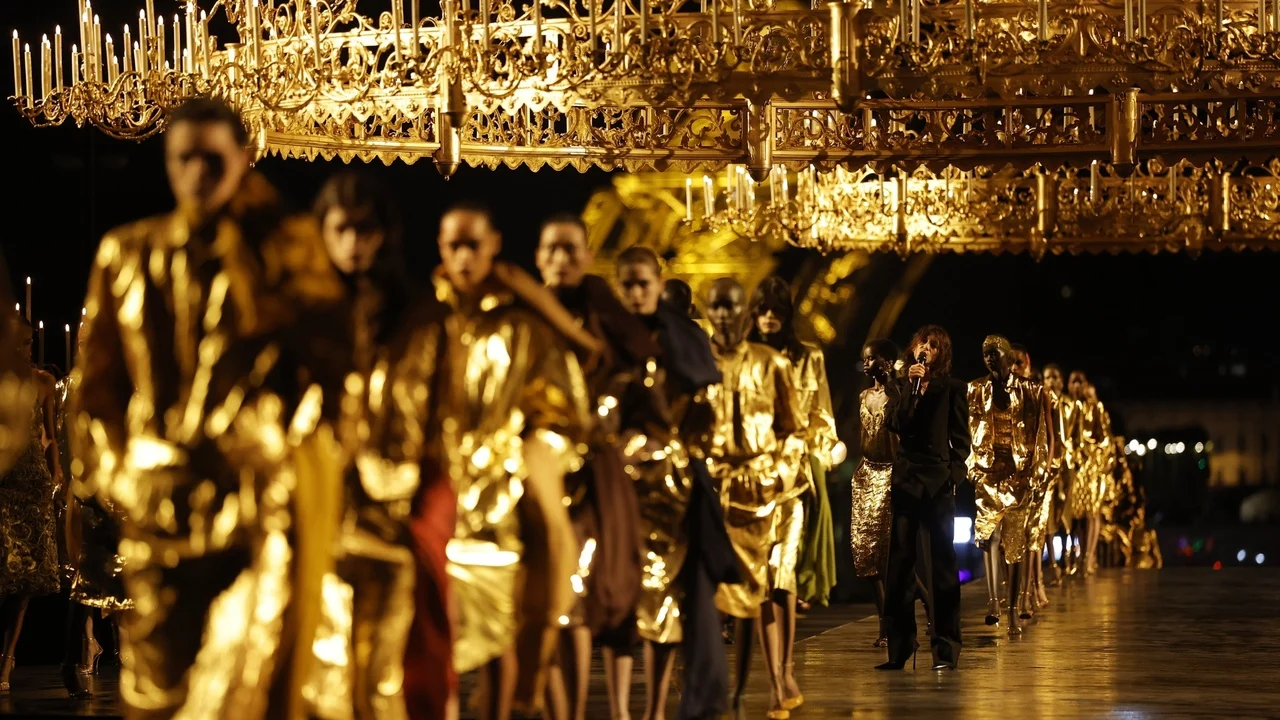
With his first Gucci collection, titled “Gucci Primavera,” Demna offered a glimpse into how he intends to reinterpret the brand’s legacy. The runway setting itself reflected this conversation between tradition and modernity. Models walked down sweeping marble staircases surrounded by classical statues, creating a dramatic atmosphere reminiscent of Florence’s rich artistic heritage. Many observers noted similarities to the famous Uffizi Gallery, a subtle tribute to the city where Gucci’s story began.
Across the presentation, Demna unveiled a total of 83 looks that combined womenswear and menswear. The collection showcased a variety of styles and personalities, suggesting a broader vision for the brand’s future—one that embraces diversity in both character and expression.
Although the designer is widely recognized for his experimental and provocative approach to fashion, his vision for Gucci appears to introduce a softer and more emotional dimension. In a letter shared with the press and on social media, Demna explained that he wants the brand to move toward a sense of refinement and feeling rather than intellectual complexity.
“I want Gucci to become lighter, softer, more refined and more emotional,” he wrote. “Sometimes it can even be irrational. I don’t want it to feel overly intellectual.”

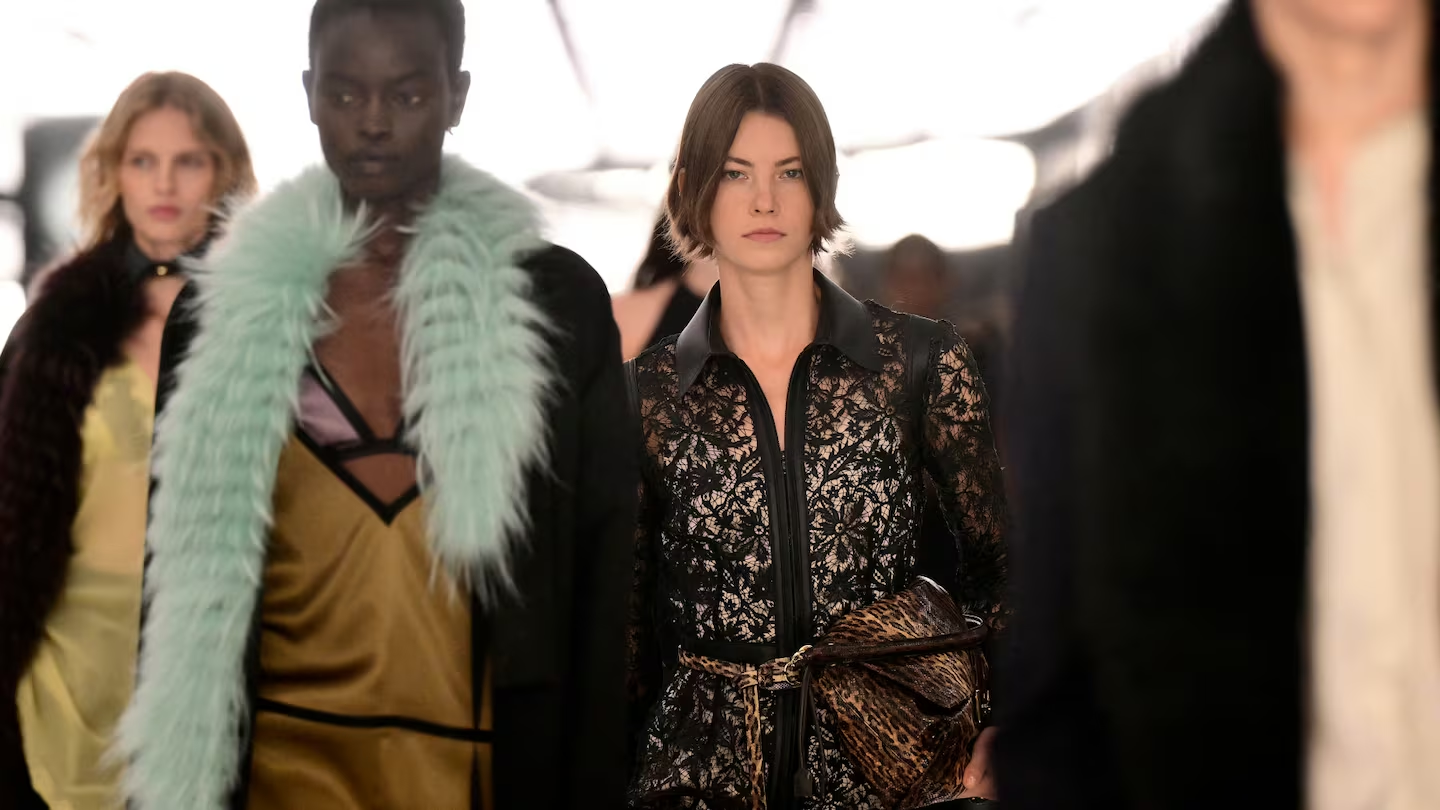
This philosophy was particularly visible in the womenswear segment of the show. Many looks focused on sleek silhouettes and sensual styling. Low-rise leggings styled as trousers appeared repeatedly on the runway, often paired with fitted tops or sharply structured jackets. Mini dresses and miniskirts added a youthful energy, while stockings featuring the signature double-G monogram reinforced the brand’s iconic visual identity.
Outerwear introduced drama and contrast throughout the collection. Faux-fur coats created bold, voluminous shapes layered over slim silhouettes, while bomber jackets added a relaxed and slightly rebellious attitude. Elegant stiletto heels completed many of the looks, enhancing the glamorous mood that defined the show.
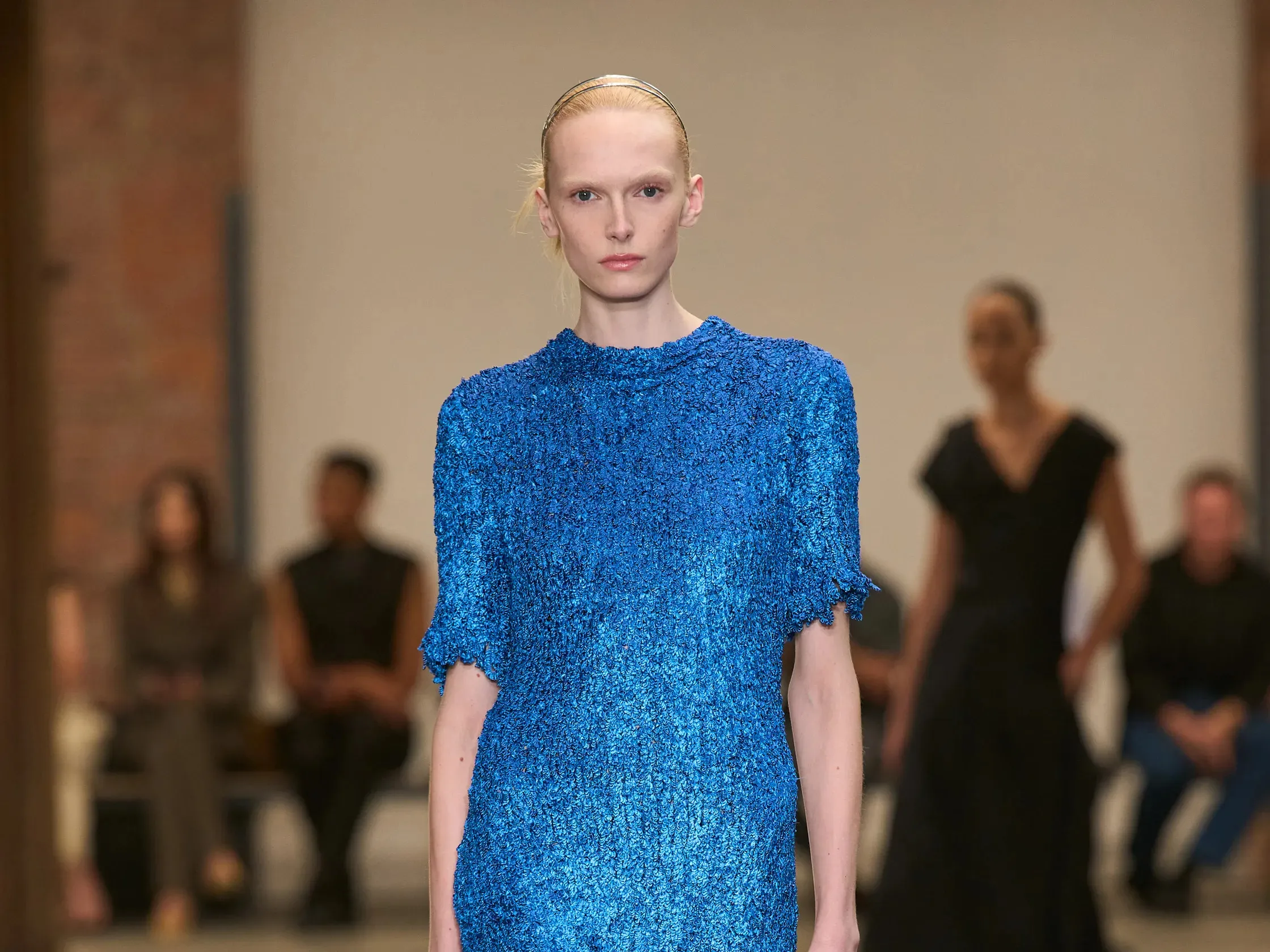
Eveningwear also stood out as a key element of the collection. As the presentation progressed, shimmering gowns appeared under the runway lights, crafted from metallic fabrics that reflected movement with every step. These pieces highlighted Gucci’s continued strength in creating striking designs suited for high-profile events and red-carpet moments.
The menswear portion of the collection delivered a distinctive aesthetic of its own. Male models walked the runway wearing body-hugging tops that emphasized athletic silhouettes, paired with biker jackets that introduced a rugged edge. Oversized leather footwear in bold shades of red and white became one of the most talked-about design features, bringing a playful and slightly surreal dimension often associated with Demna’s design language.
Accessories, an essential component of Gucci’s business, were also prominently featured. Several models carried cross-body belt bags, one of the brand’s most recognizable modern accessories. These pieces continue to resonate strongly with younger luxury consumers and remain an important part of Gucci’s commercial success.

The show concluded with a memorable finale. Supermodel Kate Moss stepped onto the runway wearing a glittering black evening gown with an open back. As she walked, the design subtly revealed a thong embroidered with the golden double-G logo—an unexpected detail that quickly became one of the most discussed moments of the presentation.
Fashion insiders soon began drawing comparisons between Demna’s debut and the glamorous period shaped by Tom Ford in the 1990s. Ford famously revitalized Gucci during that decade by introducing a seductive and polished aesthetic that helped redefine the brand’s global image.
Elements of that era seemed to echo throughout the new collection. Smoky eye makeup, glossy fabrics, and silk shirts evoked the sensual style that defined Gucci during that transformative period. For longtime followers of the brand, these references may represent an effort to reconnect with one of the house’s most influential creative chapters.
The collection arrives at a critical time for the luxury industry. After experiencing strong growth during the post-pandemic recovery, the market has slowed as consumers become more selective in their purchasing habits. According to estimates from consulting firm Bain & Company, the luxury sector has lost tens of millions of customers since the peak of that spending boom.
To address this shifting landscape, Kering has implemented a broader strategy aimed at strengthening Gucci’s global position. The company recently appointed Luca de Meo to help guide the brand’s transformation and restore momentum.

Following the runway presentation, De Meo expressed confidence that Gucci is moving in a positive direction, emphasizing the renewed creative energy surrounding the brand.
For Demna, the Fall/Winter 2026/2027 collection represents only the first step in shaping Gucci’s future. Some pieces from the line are expected to arrive in select boutiques and online platforms ahead of the official launch scheduled for July 2026.
As the fashion industry reflects on one of the most closely watched shows of the season, it is clear that Gucci has entered a new phase. Whether Demna’s vision will ultimately redefine the brand’s position in the luxury market remains to be seen—but his debut has already ensured that the world is paying close attention.