The designer’s first haute couture collection for the iconic fashion house explores the meeting point between Cristóbal Balenciaga’s sculptural legacy and Piccioli’s own love of color, romance and extravagant design.

Haute couture is fashion in its most demanding form. Every garment requires an extraordinary level of craftsmanship, with intricate handwork, exacting construction and countless hours dedicated to achieving perfection. The process can be incredibly unforgiving, but for designers with the right vision, it also offers unparalleled creative freedom.
Pierpaolo Piccioli has always been one of those designers.
For his first haute couture collection at Balenciaga, Piccioli embraced the theatricality and artistry of couture while beginning to define his own relationship with one of fashion’s most important houses. The collection combined dramatic volumes, vibrant colors and elaborate textures with a clear appreciation for the principles established by Cristóbal Balenciaga.
Piccioli arrives at Balenciaga with an impressive couture legacy of his own. During his years at Valentino, the Italian designer developed a distinctive approach centered on emotion, romance and extraordinary craftsmanship. His creations frequently appeared on the world’s most prestigious red carpets, where dramatic gowns and intricate details made his work instantly recognizable.
Couture offered Piccioli the perfect environment to explore these ideas.
At Balenciaga, however, he is now working within the shadow of a designer whose influence remains almost unmatched.
Cristóbal Balenciaga transformed 20th-century fashion through his revolutionary understanding of silhouette and construction. His use of volume and sculptural shapes challenged conventional ideas of how clothing should relate to the body. His work was so influential that Christian Dior famously described him as “the master of us all.”
For Piccioli, Balenciaga’s influence is not new. The couturier’s designs have long been part of the designer’s creative references, making his arrival at the house an opportunity to revisit ideas that have interested him throughout his career.
For his debut, Piccioli chose La Cour d’Honneur de la Cité Internationale Universitaire de Paris as the setting for a collection that explored the relationship between ordinary dressing and couture fantasy.
Anok Yai opened the show in an ensemble that initially appeared surprisingly familiar. The look featured loose trousers, a white top and a bomber jacket—pieces that could easily belong to a contemporary wardrobe.
But the execution was anything but ordinary.

The trousers were crafted from luxurious beige silk and dramatically enlarged. The white top was transformed into a rounded, voluminous silhouette, while the bomber jacket curved around the body and was completely covered in vibrant tangerine feathers.
The look immediately established one of the collection’s most important ideas: couture can elevate even the simplest wardrobe staples.
That concept appeared again and again throughout the presentation.
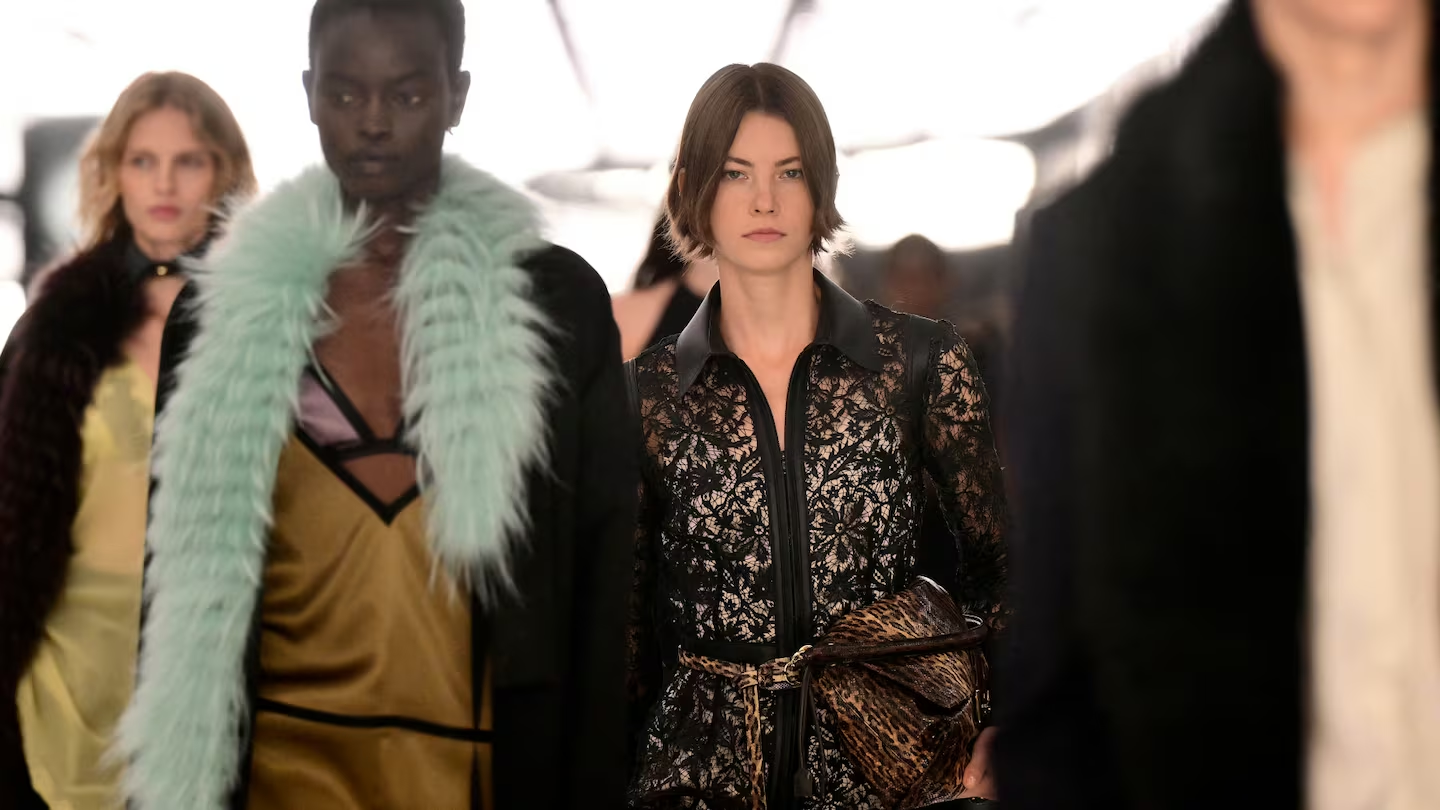
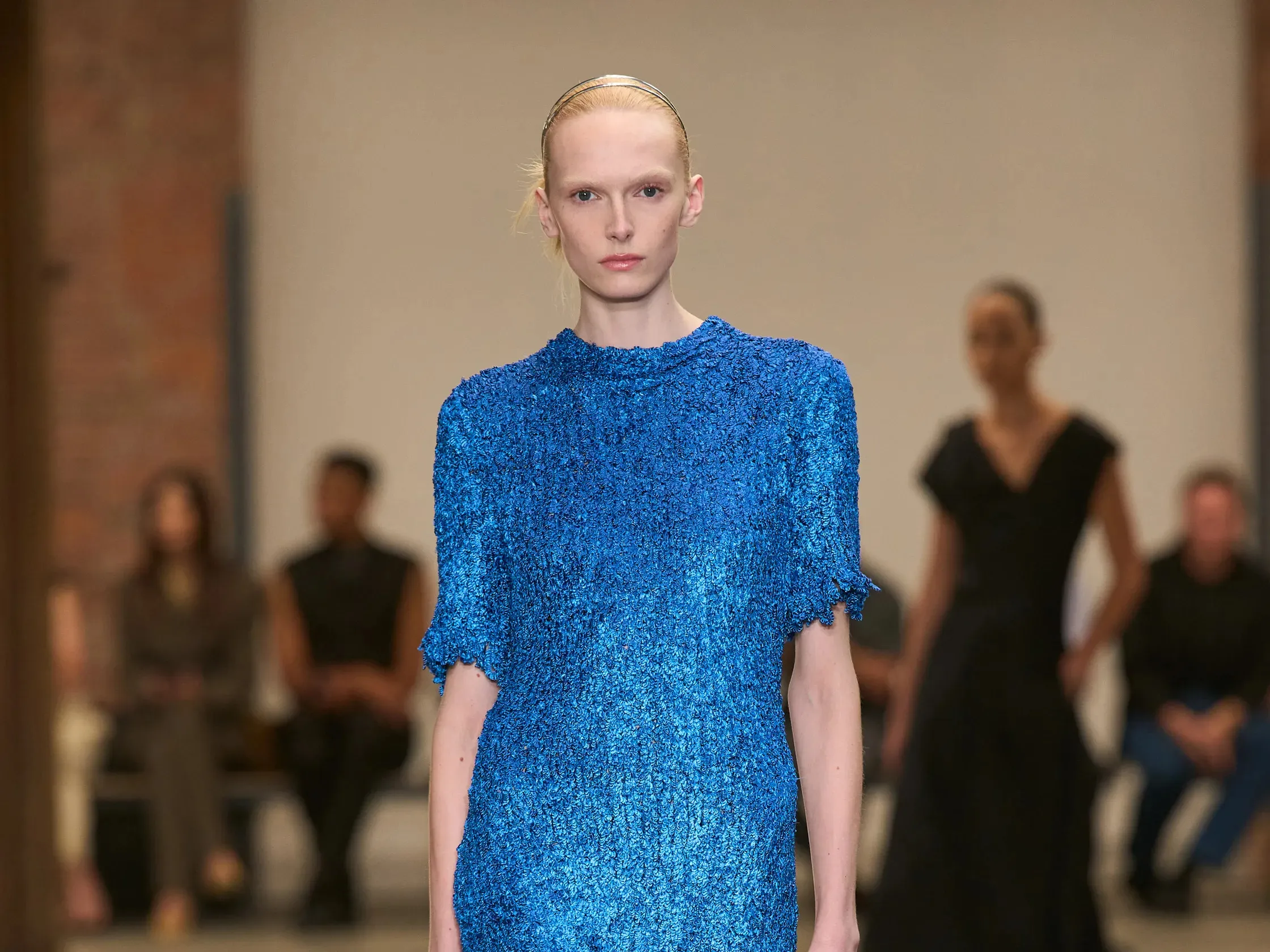
There were plenty of spectacular couture gowns decorated with feathers, sequins, lace and satin, delivering the drama and glamour expected from the highest level of fashion. Yet Piccioli often created his most memorable moments by placing extravagant elements alongside familiar pieces.
A white tank top was styled with black trousers. An oversized white shirt was combined with a violet feathered skirt. A structured black blazer appeared over a long white blouse and trousers covered in feathers.
The unexpected pairings gave the collection a sense of freshness.
Rather than presenting couture as a world completely disconnected from modern life, Piccioli suggested that its influence can extend into everyday dressing. A simple garment can become extraordinary through styling, proportion and attitude.
Opera gloves can instantly transform a tank top. A classic blazer can add a sense of contemporary cool to a dramatic evening gown. Couture, in this sense, is not simply about elaborate garments—it is about the freedom to experiment.
The approach also creates an intriguing connection to the history of Balenciaga.
Cristóbal Balenciaga closed his couture house in 1968, famously stating that there was “no one left to dress.” Nearly six decades later, Piccioli seems to be observing how people dress today and imagining how those familiar pieces could be elevated through couture techniques.
The result is a collection that takes recognizable clothing and pushes it beyond its usual limits.
A bomber jacket becomes a sculptural creation. A simple shirt is given extraordinary volume. Tailored pieces are transformed through luxurious materials and dramatic embellishments.
Piccioli’s treatment of color further distinguishes his interpretation of the house.
The designer has built much of his career around expressive and unexpected color combinations, while Cristóbal Balenciaga was celebrated for his sophisticated use of black. The collection brings these two approaches into conversation.

Bright shades and rich tones appear alongside a series of entirely black looks, creating a balance between Piccioli’s personal aesthetic and the visual history of Balenciaga.
The repetition of silhouettes throughout the show adds another layer of cohesion. Certain shapes return in different materials, colors and textures, allowing Piccioli to demonstrate how a single form can be transformed through craftsmanship.
Rather than simply looking back at the Balenciaga archive, the designer appears to be examining the fundamental ideas that shaped the house.
Volume, structure and proportion remain essential, but Piccioli interprets them through his own distinctive lens. His romanticism and appetite for spectacle bring a softer, more emotional dimension to the architectural qualities associated with the house.
The result feels less like a tribute and more like an ongoing conversation.
Piccioli is not attempting to recreate the work of Cristóbal Balenciaga. Instead, he is taking the principles that made the couturier so influential and finding new ways to express them.
That balance between heritage and individuality could become central to his future at the house.
His couture debut also raises questions about how these ideas might eventually influence Balenciaga’s ready-to-wear collections. The exaggerated silhouettes, dramatic styling and luxurious materials seen on the couture runway could eventually be adapted for a wider audience.
For now, Piccioli’s first collection makes a confident statement.

He has entered one of fashion’s most legendary houses with a clear respect for its history but without allowing that history to limit his imagination. His approach is rooted in the craftsmanship and architectural thinking that define Balenciaga, yet it is infused with the emotion, color and extravagance that have made his own work so distinctive.
The collection is ultimately a celebration of couture’s ability to transform the familiar into something extraordinary.
And if this first presentation is any indication, Pierpaolo Piccioli’s Balenciaga chapter is only beginning—with plenty more surprises still to come.