Daniel Roseberry transforms emotion and imagination into a daring procession of couture mischief.

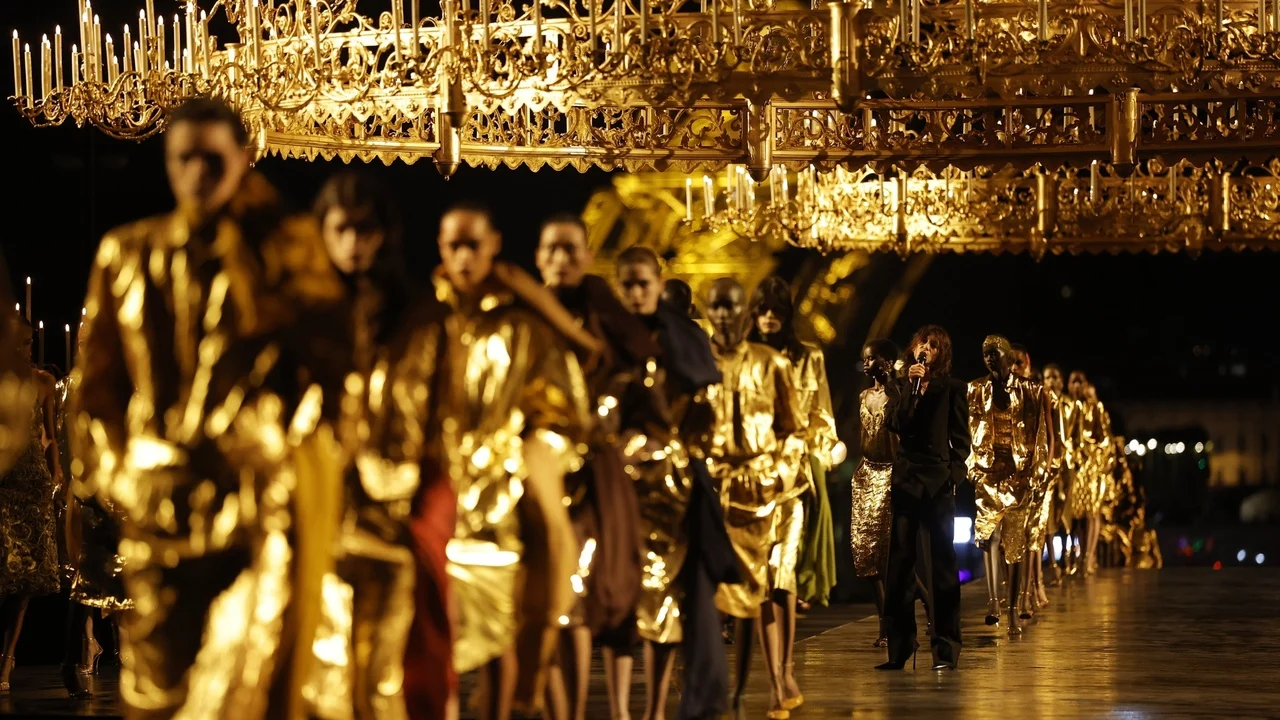
At Schiaparelli, couture has never existed to soothe. It provokes, unsettles, and delights in contradiction. Under Daniel Roseberry’s creative leadership, the house continues to operate in a space where elegance is sharpened by irony and beauty is allowed to feel strange. For Spring 2026, Roseberry presented a collection that pushed these ideas further than ever, introducing a cast of couture figures he calls the infantas terribles—designs shaped by emotion, fantasy, and fearless technical ambition rather than by realism or restraint.
The spirit of the collection announced itself before the runway show even began. Teyana Taylor arrived wearing diamonds inspired by jewels stolen from the Louvre earlier this year, a detail that felt both mischievous and intentional. The reference was subtle but unmistakable, reinforcing Schiaparelli’s long-standing relationship with cultural commentary and visual wit. In Roseberry’s world, nothing is purely ornamental; each choice carries a narrative undercurrent, rewarding those who look beyond the surface.

Rather than borrowing direct imagery from Michelangelo’s Sistine Chapel, Roseberry focused on the emotional response such a space provokes. The collection was guided by a simple but radical shift in thinking: not what couture should resemble, but how it should make us feel. Awe, tension, vulnerability, and fascination became the emotional framework of the season. These sensations were translated into garments that felt almost alive—pieces that hovered between structure and instinct, between couture and creature.
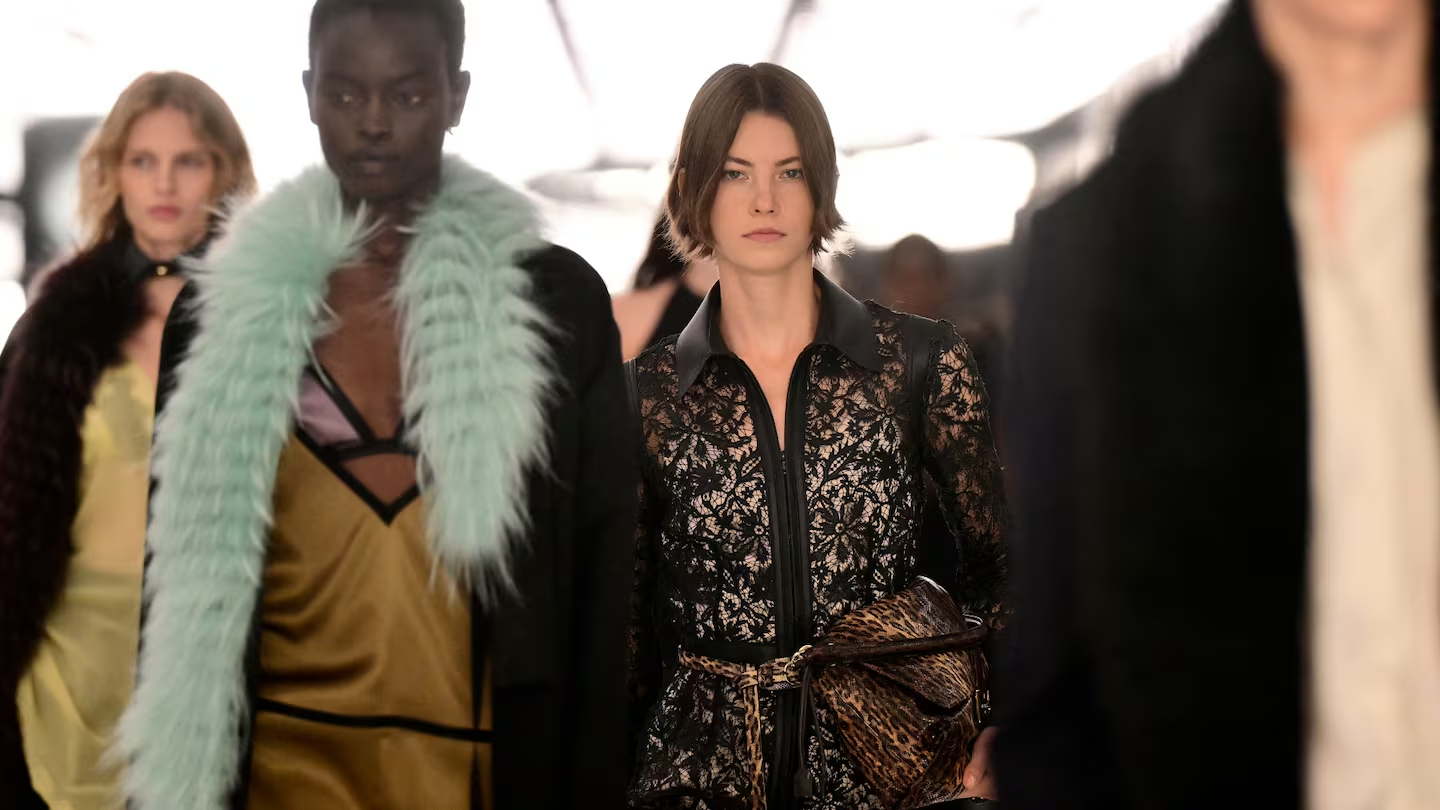
Throughout the show, familiar silhouettes were continuously disrupted by surreal gestures. Classic pumps were transformed into sculptural objects, with meticulously crafted bird heads emerging from their toes. Polka dots hardened into spikes, while sharply tailored jackets developed horns at the bust and exaggerated hips engineered to appear suspended in defiance of gravity. One of the most recurring and striking motifs was the scorpion tail, appearing through embroidery, lace, and sheer illusion—not as an accessory, but as a natural extension of the body. These were not theatrical costumes, but precise evolutions of couture form.
What grounded this imaginative world was an extraordinary level of craftsmanship. Many pieces revealed their complexity only upon close inspection. A surface that initially appeared understated might reveal itself as a satin-stitch trompe l’œil crocodile tail. Lace was hand-cut and sculpted into bas-relief, creating depth that blurred the boundary between textile and sculpture. Feathers—thousands of them—were individually painted, shaded, and applied by hand, producing garments that shimmered with movement even in stillness.


Schiaparelli.
The scale of labor behind the collection was staggering. One gown alone incorporated 25,000 silk-thread feathers and required nearly 4,000 hours to complete. Another was densely embroidered with natural seashells, smoked crystals, and layers of intricate lacework, transforming the body into a moving canvas. Elsewhere, neon tulle was layered beneath traditional lace to create a modern sfumato effect—an unexpected dialogue between Renaissance painting techniques and contemporary intensity. Roseberry’s willingness to merge historical craftsmanship with bold color and unconventional texture felt both respectful and rebellious.
Narrative threads were woven throughout the collection with precision. A look inspired by Isabella Blow reinterpreted Schiaparelli’s iconic sharp-shouldered “Elsa” jacket, puncturing it with organza spikes reminiscent of a blowfish—simultaneously a tribute and a reinvention. Feathered wings extended from backs and necklines, not as decorative afterthoughts, but as structural elements that transformed garments into expressive forms suggesting flight, defiance, and metamorphosis.
Despite the drama and intensity, humor remained essential. Roseberry understands that couture does not need solemnity to command seriousness. His embrace of exaggeration, irony, and strangeness pays homage to Elsa Schiaparelli’s original philosophy: fashion as wit, illusion, and intellectual provocation. There is confidence in the excess, and pleasure in pushing ideas to their most extreme expressions.

Ultimately, the Spring 2026 couture collection was not driven by shock alone. It was a celebration of the atelier’s ability to transform the improbable into something meticulously controlled. These infantas terribles were never meant to be softened or explained away. They exist to remind us that couture, at its most compelling, is emotional, irrational, and unapologetically excessive.
In a season marked by restraint, nostalgia, and familiar elegance, Schiaparelli stood apart by daring to feel too much. By allowing emotion to lead and craftsmanship to follow without compromise, Daniel Roseberry reaffirmed that the future of couture may not lie in perfection, but in beautifully constructed rebellion—where imagination runs free and every seam carries feeling.